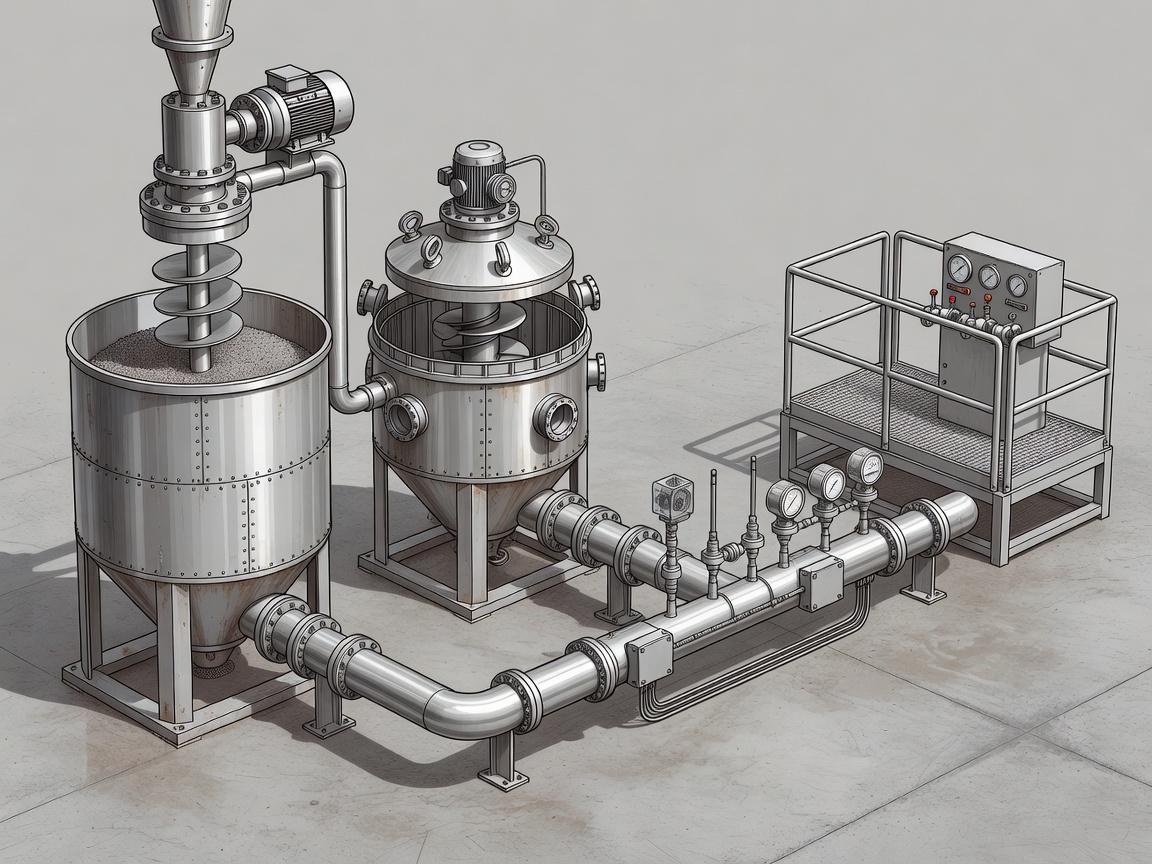
Start with an executable instruction
Pharmaceutical manufacturing brings together a physical process and a set of authorized instructions. A recipe describes what should happen; equipment automation coordinates how permitted actions occur. Neither replaces the scientific basis for the process. Teams must understand the material characteristics, product risks and operating conditions before deciding what a system should enforce. The useful question is not “How much can we automate?” but “Which actions and evidence need reliable control?”
01 / Readiness
Confirm the starting conditions
Before charging a vessel, the production team checks material identity and status, equipment availability, cleaning status and the correct instruction version. Where electronic checks are used, their data sources matter. A barcode match can verify an identifier without proving that the physical container is suitable or that its contents have been stored correctly.
Readiness therefore combines system checks with procedural responsibilities. A status that is missing, stale or inconsistent should lead to a defined response. Staff need to know who can resolve the discrepancy, what evidence is required and whether the batch must remain on hold while the issue is investigated.
02 / Recipe structure
Give actions a clear place
The ISA-88 batch-control framework distinguishes equipment and procedural models, helping teams describe units, operations and phases without treating the entire process as one opaque program. A mixing phase, for example, can have defined inputs, completion conditions and permitted state transitions. Reusable structures can reduce inconsistency, but only when their configuration and intended use are controlled.
ISA-95 addresses the relationship between enterprise and manufacturing operations. It can help explain why a production order, a material record and a machine command are different objects. Good interfaces preserve these distinctions rather than assuming that identical field names guarantee identical meaning.
03 / Equipment control
Connect commands to physical response
A programmable logic controller, or PLC, may execute equipment logic; a distributed control system, or DCS, may coordinate process control across a plant. A supervisory control and data acquisition system, or SCADA, provides supervisory functions and visibility. These labels describe common roles, not guarantees about a specific architecture.
A command to heat a tank is distinct from evidence that the product reached the required conditions. Sensor location, calibration, response time and process mixing affect that conclusion. The control strategy must define which values drive an action, which are recorded and which require a response when they become unreliable.
04 / Exceptions
Design the route out of normal operation
Alarms call attention to conditions; interlocks restrict actions according to defined logic. They serve related but different purposes. Too many poorly prioritized alarms can obscure an important event, while an interlock without an understood recovery path can encourage unsafe workarounds. Both need deliberate design, testing and operational ownership.
Hold, stop and abort states should have explicit meanings. After an interruption, teams must establish what material remains in the equipment, which actions completed and whether time-dependent limits were affected. Restarting a sequence is not the same as authorizing continued manufacture. The justification belongs in the controlled batch account.
05 / Interfaces
Make handovers observable
A manufacturing execution system, or MES, may coordinate instructions, equipment interactions and electronic records. Interfaces to inventory systems or laboratory systems can reduce transcription, but they introduce failure modes of their own. Delayed messages, duplicate transactions and mismatched identifiers should be considered before operation, not discovered during a difficult batch review.
Protocols such as OPC UA can support structured industrial communication. IEC 61131-3 provides a framework for programmable-controller languages. Neither establishes the correctness of an individual configuration. Teams still need agreed data definitions, access controls, time synchronization and tests that show how failures are detected and resolved.
06 / Handover
Finish with an evidence package
At the end of a production step, a completed status should be supported by the relevant measurements, equipment events, material movements and documented exceptions. A receiving team needs enough context to continue safely. An unexplained discrepancy should not disappear simply because the next operation is available in the interface.
Production completion is not batch release. Quality review considers the broader record, applicable specifications, investigations and responsibilities under the quality system. In the European Union, Qualified Person certification has a particular legal role; other jurisdictions allocate responsibilities differently. An automated sequence cannot assume those responsibilities merely by reaching its final state.
Terminology: recipe versus batch record
A recipe defines intended execution. The batch record documents actual execution and associated evidence. Systems may connect them closely, but they answer different questions.
Terminology: process limit versus alarm limit
A process limit describes an acceptable operating boundary in its defined context. An alarm limit triggers attention. Their relationship must be justified; they are not automatically interchangeable.